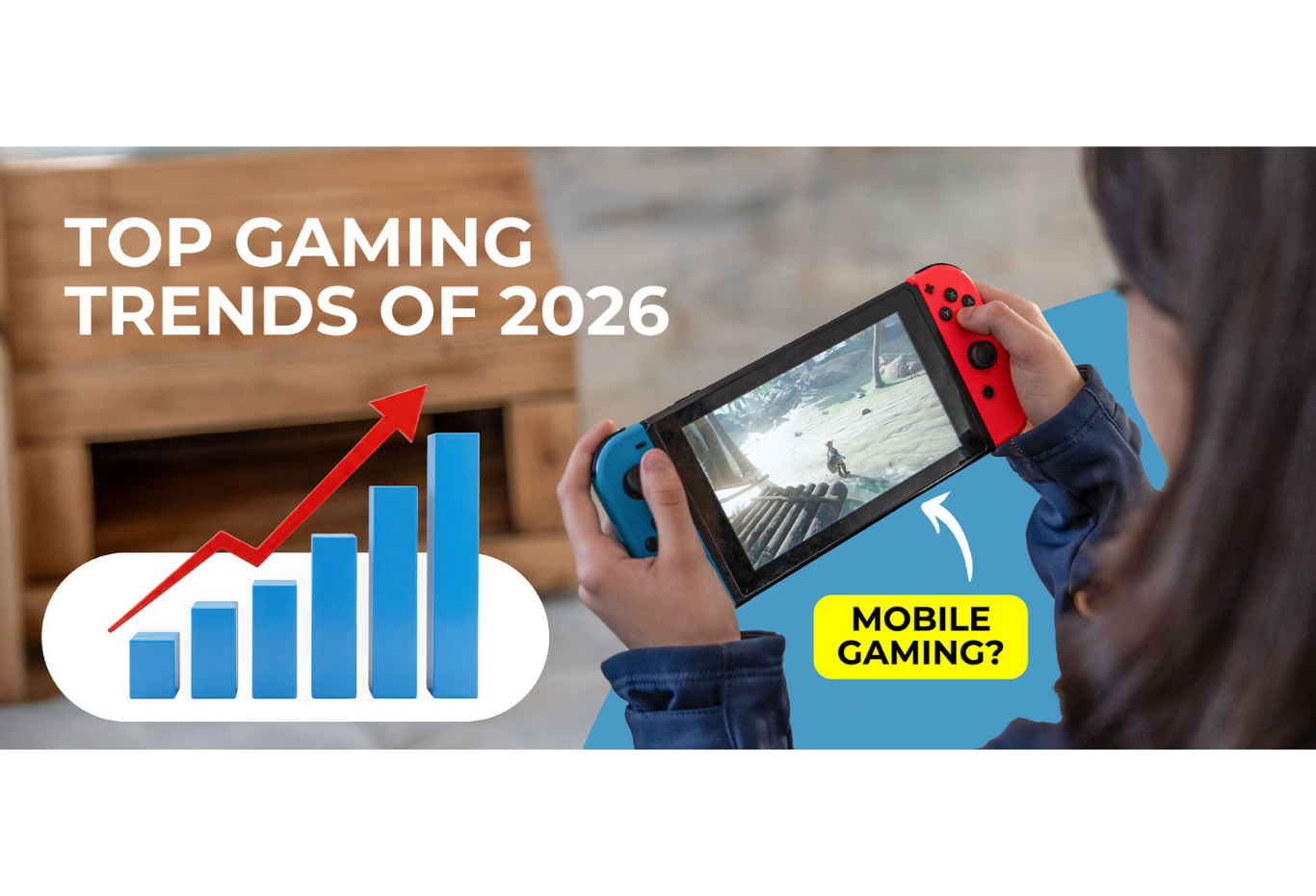
Gaming 2026: Trends, Technology, Platforms, Games & Buying Guide
Gaming in 2026 is more than simply playing video games for entertainment. It has become a broad digital ecosystem that combines powerful hardware, online communities, competitive esports, streaming, virtual worlds, mobile gaming, cloud services, and increasingly sophisticated artificial intelligence. From high-performance gaming PCs and next-generation consoles to portable devices and smartphones, players now have more ways to enjoy games than ever before.
The gaming industry continues to evolve around convenience, realism, social interaction, and personalization. Players can compete with friends across different platforms, stream gameplay to global audiences, use advanced accessories for more immersive experiences, and access large game libraries without always needing traditional hardware.
Whether you are a casual player, competitive gamer, content creator, or someone considering buying gaming equipment, understanding the major gaming trends of 2026 can help you make better decisions.
What Is Gaming?
Gaming refers to playing interactive digital games through devices such as PCs, consoles, smartphones, tablets, and dedicated handheld gaming systems. Games can cover many genres, including action, adventure, role-playing, simulation, sports, strategy, racing, survival, puzzle, and multiplayer games.
Modern gaming is not limited to a single platform. A player might enjoy a major AAA title on a gaming PC, play a quick mobile game during a commute, use a handheld device while traveling, and participate in an online multiplayer game with friends later in the day.
This variety has made gaming one of the most flexible forms of digital entertainment.
Major Gaming Platforms in 2026
One of the most important decisions for gamers is choosing the right platform. Each platform offers different advantages.
Gaming PCs
Gaming PCs remain popular among players who want customization and high performance. A PC can be upgraded over time with better graphics hardware, additional memory, faster storage, or improved cooling.
PC gaming also offers access to extensive game libraries, mods, competitive titles, simulation games, and a wide range of accessories.
However, building a powerful gaming PC can require a larger initial investment than some consoles. Players also need to consider monitor quality, peripherals, operating system requirements, and maintenance.
Gaming Consoles
Consoles continue to provide a convenient gaming experience. Players can connect a console to a television, install games, connect controllers, and start playing without dealing with many of the hardware configuration issues associated with PCs.
Consoles are especially attractive to gamers who prioritize simplicity, exclusive titles, couch gaming, and multiplayer experiences.
Handheld Gaming
Portable gaming has become increasingly important. Modern handheld devices allow players to enjoy more sophisticated games away from a traditional desk or television.
Handheld gaming is useful for travel, commuting, relaxing in different rooms, and short gaming sessions. Battery life, display quality, controls, storage, weight, and performance are important considerations when choosing a portable gaming device.
Mobile Gaming
Smartphones and tablets remain major gaming platforms. Mobile games range from simple puzzle titles to competitive multiplayer experiences and visually impressive role-playing games.
One major advantage of mobile gaming is accessibility. Many people already own a smartphone, meaning they can begin gaming without purchasing a dedicated device.
Popular Gaming Genres
The gaming industry covers an enormous range of genres, allowing different types of players to find experiences that suit their interests.
Action and Adventure
Action games generally focus on fast gameplay, combat, exploration, and challenges. Adventure games may emphasize storytelling, exploration, puzzles, and character development.
Many modern games combine both styles, creating large worlds where players can explore while completing missions.
Role-Playing Games
Role-playing games, commonly called RPGs, allow players to develop characters, collect equipment, make decisions, complete quests, and explore detailed worlds.
RPGs can be particularly engaging because progression systems give players a reason to continue playing.
Sports and Racing
Sports games simulate activities such as football, basketball, baseball, and other competitive sports. Racing games range from realistic driving simulations to arcade-style experiences.
These games can appeal to both casual players and competitive gaming fans.
Strategy Games
Strategy games require planning, resource management, decision-making, and tactical thinking. Players may manage armies, cities, businesses, civilizations, or fictional worlds.
Strategy games can be slower-paced than action games but often provide considerable depth.
Simulation Games
Simulation titles attempt to recreate real-world or fictional activities. Examples include life simulation, farming, construction, transportation, business management, and flight experiences.
These games are popular among players who enjoy creativity, planning, and long-term progression.
Multiplayer Games
Multiplayer gaming allows people to play together or compete against each other online. Multiplayer experiences can range from cooperative adventures to highly competitive matches.
Communication, teamwork, strategy, and community participation are often important parts of these games.
Gaming Hardware Trends in 2026
Gaming hardware continues to improve in several important areas.
Better Graphics
Graphics technology continues to focus on more realistic lighting, textures, environments, characters, and visual effects.
Modern rendering technologies can make virtual environments appear more detailed and immersive. However, better graphics often require more powerful hardware.
Faster Storage
Fast storage has become an important part of modern gaming. Solid-state storage can reduce loading times and improve overall system responsiveness.
Gamers with large libraries should consider storage capacity carefully because modern games can require significant amounts of space.
High-Refresh-Rate Displays
Gaming monitors and displays increasingly focus on smooth motion and responsive gameplay.
A higher refresh rate can make fast-moving games feel smoother, particularly in competitive genres such as racing and first-person shooters.
Resolution also matters. Players need to balance resolution, refresh rate, screen size, and hardware performance rather than choosing a display based on one specification alone.
Gaming Accessories
Gaming accessories can significantly influence the overall experience.
Popular accessories include:
- Mechanical gaming keyboards
- Gaming mice
- Controllers
- Headsets
- Microphones
- Gaming monitors
- Racing wheels
- Streaming equipment
- Controller charging stations
- Gaming chairs
- Mouse pads
The best accessory depends on the type of games a person plays. A competitive PC gamer may prioritize a responsive mouse, while a racing enthusiast may prefer a steering wheel and pedal setup.
Cloud Gaming and Digital Access
Cloud gaming continues to influence how people think about gaming hardware. Instead of relying entirely on a powerful local device, some gaming services allow games to be processed remotely and streamed to compatible devices.
This approach can make gaming more accessible to people who do not want to build expensive gaming PCs.
However, cloud gaming depends heavily on internet quality. Connection speed, latency, data limits, and service availability can influence the experience.
Digital game distribution has also become an essential part of modern gaming. Players can purchase, download, update, and manage games without physical discs.
Artificial Intelligence and Gaming
Artificial intelligence is becoming increasingly relevant to gaming.
AI can be used in areas such as non-player character behavior, procedural content generation, personalization, game testing, moderation, and development workflows.
For players, better AI-controlled characters can create more dynamic experiences. Instead of following predictable patterns, opponents and companions can potentially respond more naturally to player actions.
AI may also help developers create larger and more responsive game worlds.
At the same time, the use of AI raises questions about creativity, employment, intellectual property, and the role of human developers. The technology is likely to remain an important discussion within the gaming industry.
Online Gaming and Gaming Communities
Gaming has become increasingly social.
Players can communicate through voice chat, text messaging, community platforms, and social features built into games. Online communities can help players find teammates, share strategies, discuss updates, and create friendships.
However, online gaming also requires responsible behavior. Players should be careful about sharing personal information, interacting with strangers, clicking suspicious links, and using the same password across multiple accounts.
Parents should also understand privacy and communication settings when younger players use online gaming services.
Esports in 2026
Esports has developed into a major competitive gaming category.
Professional players compete in organized tournaments involving games such as shooters, strategy titles, sports games, fighting games, and multiplayer online games.
Esports can involve teams, coaches, analysts, sponsors, broadcasters, tournament organizers, and content creators.
For aspiring competitive players, improving skills requires more than simply playing for long hours. Practice routines, communication, strategy, teamwork, physical well-being, and time management can all contribute to better performance.
Gaming and Content Creation
Gaming and content creation are closely connected.
Platforms for video and livestream content allow gamers to share gameplay, reviews, tutorials, reactions, challenges, and entertainment with audiences around the world.
A gaming creator may build a channel around:
- Game reviews
- Walkthroughs
- Gaming news
- Tips and tutorials
- Live gameplay
- Esports analysis
- Hardware reviews
- Game comparisons
- Funny gaming moments
However, successful content creation requires more than playing games. Consistent publishing, useful topics, good audio, attractive thumbnails, audience engagement, and a recognizable content style can make a major difference.
Choosing the Right Gaming Setup
Building a gaming setup does not necessarily mean buying the most expensive equipment.
Start by identifying your gaming habits.
Ask yourself:
- What types of games do I play?
- Do I prefer PC, console, mobile, or handheld gaming?
- Do I play casually or competitively?
- Do I need a system for content creation as well?
- How much storage do I need?
- What display quality do I want?
- Which accessories are actually useful?
A casual player may not need an expensive high-end computer. On the other hand, someone playing competitive games or creating gaming videos may benefit from stronger hardware.
Gaming on a Budget
Gaming can become expensive when players continuously upgrade hardware, buy new releases, purchase accessories, and subscribe to multiple services.
A smart gaming budget should include both initial and ongoing costs.
Consider:
- Hardware
- Games
- Subscriptions
- Accessories
- Internet service
- Upgrades
- Repairs
- Storage
Buying fewer but better-quality accessories can sometimes be more economical than purchasing several inexpensive products that need frequent replacement.
Pre-owned games, sales, bundles, free-to-play titles, and subscription libraries can also provide more entertainment for a limited budget.
Gaming Safety and Digital Security
Online safety should be part of every modern gaming setup.
Gamers should use strong, unique passwords and enable two-factor authentication whenever available. Avoid sharing account credentials with other people and be cautious about suspicious messages promising free games, virtual currency, skins, or exclusive rewards.
Players should also be aware of excessive spending through in-game purchases.
Parents may want to review parental controls, spending restrictions, communication settings, and age ratings for younger gamers.
Gaming and Healthy Habits
Gaming can be an enjoyable hobby, but balance is important.
Long gaming sessions can contribute to eye fatigue, poor posture, physical inactivity, and disrupted sleep if players do not take breaks.
Simple habits can help:
- Take regular screen breaks.
- Adjust your chair and monitor for comfortable posture.
- Keep the room properly lit.
- Stay hydrated.
- Include physical activity in your routine.
- Avoid letting gaming consistently interfere with sleep.
- Set reasonable spending limits.
The goal is not necessarily to eliminate gaming but to make it part of a balanced lifestyle.
Sustainable Gaming
Sustainability is becoming more relevant to technology and gaming.
Electronic devices require materials, energy, manufacturing, packaging, and transportation. Extending the useful life of gaming equipment can reduce unnecessary electronic waste.
Gamers can consider repairing devices, upgrading components when practical, buying durable accessories, and responsibly recycling electronics at the end of their useful life.
Buying a quality product that lasts several years may be more sustainable than repeatedly replacing low-quality equipment.
Common Gaming Buying Mistakes
One of the biggest mistakes is focusing entirely on specifications without considering actual needs.
A gamer may purchase an extremely powerful computer but use it mainly for simple games. Another player may buy an expensive monitor without having hardware capable of taking full advantage of it.
Other common mistakes include:
- Buying unnecessary accessories
- Ignoring storage requirements
- Choosing hardware without checking compatibility
- Forgetting long-term subscription costs
- Purchasing games impulsively
- Ignoring warranty and support
- Prioritizing appearance over performance
- Spending beyond a realistic budget
A balanced gaming setup should match the player's actual habits.
The Future of Gaming
The future of gaming is likely to combine several technologies rather than depend on one major development.
Cloud gaming, AI, virtual and augmented reality, portable hardware, faster connectivity, advanced graphics, social platforms, and digital marketplaces may continue to influence the industry.
Games are also becoming increasingly persistent and connected. Players can expect more live content, seasonal updates, online communities, cross-platform experiences, and personalized gameplay.
At the same time, traditional gaming will remain important. Not every player wants an always-online experience, and single-player games, local multiplayer, physical collections, and offline experiences continue to have strong appeal.
The future of gaming will therefore likely be diverse rather than focused on one format.
Final Thoughts
Gaming in 2026 represents a broad entertainment ecosystem that includes PCs, consoles, smartphones, handheld devices, cloud platforms, esports, streaming, content creation, and online communities. Technological improvements are making games more visually impressive, accessible, connected, and interactive.
For consumers, the most important lesson is that the newest or most expensive gaming product is not automatically the best choice. The right setup depends on your preferred games, platform, performance expectations, budget, and lifestyle.
Whether you are a casual player, competitive gamer, content creator, or someone entering gaming for the first time, understanding platforms, hardware, accessories, digital safety, budgeting, and emerging trends can help you make smarter decisions and enjoy gaming more.