Sports Equipment: A Complete Guide to Choosing the Right Gear for Fitness, Training & Recreation
Sports equipment plays an important role in fitness, athletic training, recreational activities, and competitive sports. Whether you enjoy running, cycling, football, basketball, tennis, swimming, strength training, or outdoor activities, the right equipment can make your experience safer, more comfortable, and more enjoyable.
Sports equipment ranges from simple items such as water bottles, balls, and resistance bands to specialized products such as treadmills, weight-training machines, protective gear, bicycles, and professional athletic equipment. With so many choices available, beginners can easily become overwhelmed by different brands, materials, specifications, and price points.
The good news is that you do not always need the most expensive equipment. The best choice depends on your sport, experience level, available space, frequency of use, budget, and personal goals.
What Is Sports Equipment?
Sports equipment refers to tools, gear, accessories, clothing-related equipment, and training devices used for physical activities and sports.
Some equipment is essential for participating in a particular sport. For example, a football requires a ball, while cycling requires a suitable bicycle and safety equipment.
Other products are designed to improve training, performance, comfort, or safety.
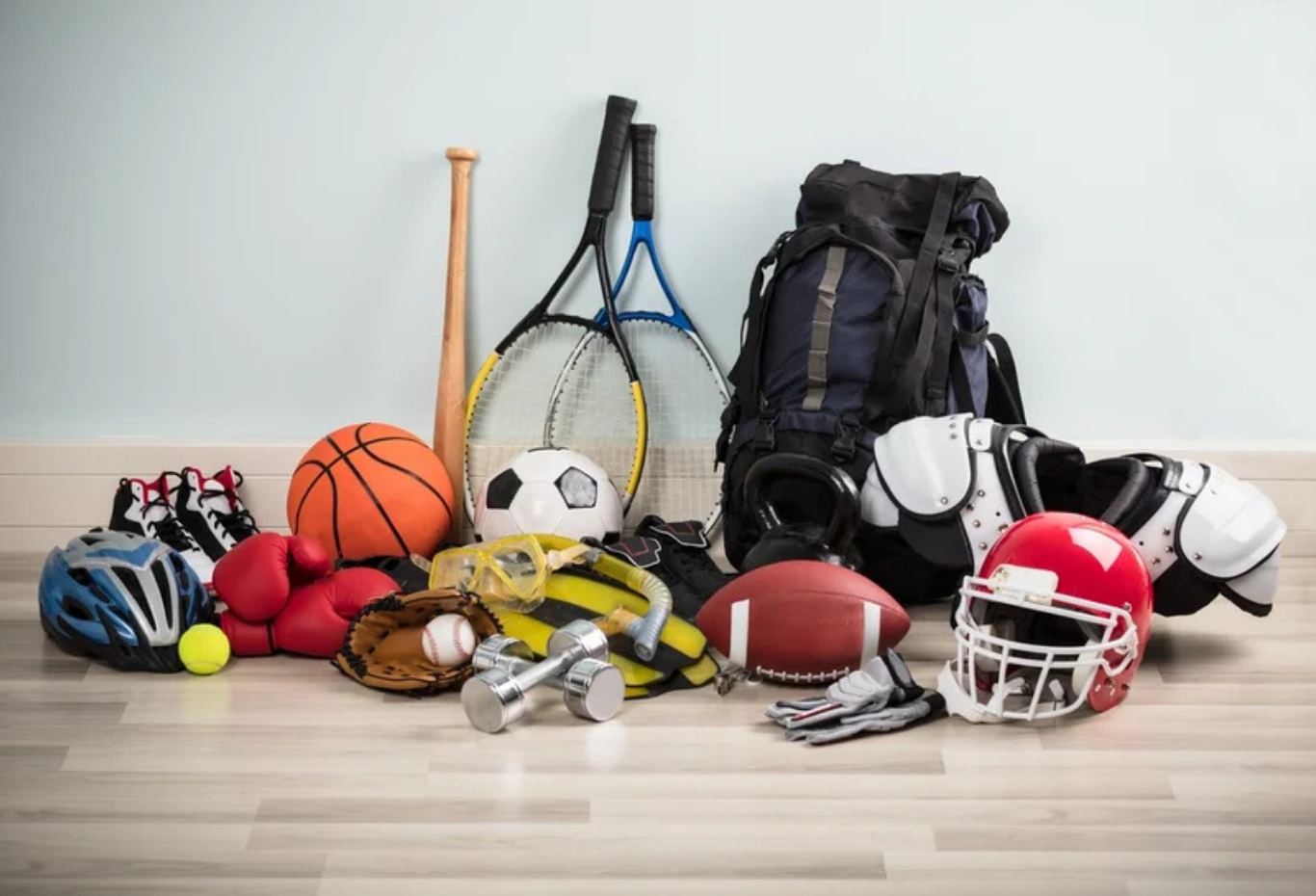
Common sports equipment includes:
- Sports balls
- Bats and rackets
- Training equipment
- Fitness machines
- Free weights
- Resistance bands
- Protective equipment
- Sports footwear
- Exercise mats
- Swimming equipment
- Cycling gear
- Outdoor equipment
- Recovery accessories
The right equipment should support the activity rather than simply add unnecessary complexity.
Why Quality Sports Equipment Matters
Good sports equipment can improve the overall experience of physical activity.
One major advantage is comfort. Equipment that fits properly and feels comfortable can make it easier to remain active consistently.
Safety is another important consideration. Protective equipment such as helmets, guards, appropriate footwear, and padding can help reduce certain risks associated with sports.
Quality equipment can also provide better durability. If a product is used regularly, stronger materials and reliable construction may provide better long-term value.
However, quality does not always mean the most expensive option. A reasonably priced product can be perfectly suitable for recreational use if it meets the user's needs.
Types of Sports Equipment
Sports equipment can be divided into several major categories.
Team Sports Equipment
Team sports such as football, basketball, volleyball, hockey, and cricket require specialized equipment.
Football equipment may include balls, goalkeeping gloves, cones, training bibs, and protective accessories.
Basketball players generally need a suitable basketball, basketball shoes, training equipment, and sometimes protective accessories.
Cricket equipment can include bats, balls, helmets, batting gloves, pads, wickets, and protective guards.
The equipment required depends on whether you are practicing casually, training regularly, or participating in competitive matches.
Racquet Sports Equipment
Tennis, badminton, squash, and similar sports rely heavily on rackets and related accessories.
Important considerations include racket weight, grip size, balance, string setup, and playing style.
Beginners should generally avoid choosing equipment purely because a professional athlete uses it. Professional-level equipment may have characteristics designed for experienced players and may not be appropriate for someone learning the basics.
Fitness and Gym Equipment
Fitness equipment is one of the broadest categories.
It includes:
- Dumbbells
- Kettlebells
- Barbells
- Weight plates
- Resistance bands
- Exercise benches
- Pull-up bars
- Yoga mats
- Treadmills
- Exercise bikes
- Rowing machines
- Cross trainers
Not every home gym needs all of these products.
A simple setup with adjustable weights, resistance bands, an exercise mat, and a suitable bench can support many types of workouts.
Running Equipment
Running requires relatively little equipment, which is one reason it remains accessible.
A good pair of running shoes is often the most important investment. Other useful equipment may include running clothing, reflective accessories, water bottles, sports watches, running belts, and weather-appropriate layers.
For outdoor running, visibility can become particularly important in low-light conditions.
Cycling Equipment
Cycling requires both the bicycle itself and appropriate safety accessories.
Common cycling equipment includes:
- Road or mountain bikes
- Helmets
- Cycling gloves
- Lights
- Water bottles
- Pumps
- Repair kits
- Cycling shoes
- Locks
- Reflective accessories
A helmet should fit correctly and be appropriate for the type of cycling activity.
Swimming Equipment
Swimming equipment can improve comfort and training.
Common products include:
- Swimsuits
- Goggles
- Swim caps
- Kickboards
- Pull buoys
- Training fins
- Nose clips
- Waterproof bags
Beginners do not need every accessory. A comfortable swimsuit and properly fitting goggles may be enough to start.
Choosing Sports Equipment Based on Your Activity
Before purchasing equipment, identify exactly what you intend to do.
A person interested in home strength training has very different requirements from someone preparing for a cycling competition.
Consider these questions:
- What sport or activity will I perform?
- How often will I use the equipment?
- Am I a beginner, intermediate, or experienced participant?
- Will I use it at home, outdoors, or in a sports facility?
- How much space do I have?
- What is my realistic budget?
- Do I need professional-level performance?
- How much maintenance will the equipment require?
Answering these questions can prevent unnecessary purchases.
Size and Fit Matter
Proper fit is one of the most important factors when purchasing sports equipment.
This is particularly true for footwear, helmets, protective equipment, gloves, clothing-related gear, and equipment with adjustable components.
For example, running shoes that are too small can become uncomfortable during longer sessions. A poorly fitting helmet may not provide the intended level of protection.
When shopping online, check the manufacturer's sizing information rather than relying only on your usual clothing or shoe size.
Measurements can vary between brands.
Materials and Durability
Materials affect the weight, comfort, performance, and lifespan of sports equipment.
Metal equipment such as weights and certain training machines can provide significant durability. Carbon fiber and other lightweight materials are common in specialized cycling equipment, while synthetic fabrics are widely used in sports clothing.
For beginners, durability should usually be considered alongside price.
A product that costs slightly more but survives regular use may offer better value than an inexpensive item that needs frequent replacement.
Sports Equipment for Home Workouts
Home fitness equipment has become increasingly popular because it allows people to exercise without traveling to a gym.
However, available space should be considered before purchasing large equipment.
For a small home workout area, useful options may include:
- Resistance bands
- Adjustable dumbbells
- Kettlebells
- Exercise mats
- Jump ropes
- Compact benches
- Doorway pull-up equipment where appropriate
Larger homes may accommodate treadmills, stationary bikes, rowing machines, or multi-functional strength equipment.
Before purchasing large equipment, measure the available area and consider storage, ventilation, noise, floor protection, and access to power where required.
Protective Sports Equipment
Safety equipment should never be treated as an optional fashion accessory.
Depending on the sport, protective equipment may include:
- Helmets
- Mouthguards
- Knee pads
- Elbow pads
- Shin guards
- Wrist protection
- Goalkeeper gloves
- Protective eyewear
- Athletic supports
The required equipment depends on the sport and its rules.
Protective equipment should fit correctly and be replaced when damaged or when the manufacturer recommends replacement.
Sports Footwear
Sports footwear deserves special attention because different activities place different demands on the feet.
Running shoes are designed around running movement, while court shoes may provide features suited to lateral movement. Football boots are designed around playing surfaces, and hiking shoes are designed for outdoor terrain.
Avoid assuming that one pair of athletic shoes is ideal for every sport.
When selecting footwear, consider:
- Activity type
- Surface
- Fit
- Cushioning
- Stability
- Flexibility
- Durability
- Personal comfort
Comfort is important, but footwear should also be appropriate for the activity.
Technology and Smart Sports Equipment
Technology has become an increasingly visible part of sports equipment.
Modern fitness products may include sensors, digital displays, connected applications, GPS tracking, heart-rate monitoring, workout statistics, and training analysis.
Smartwatches and fitness trackers can help users monitor activity levels, workouts, and other metrics.
Connected exercise equipment can also provide guided workouts and performance information.
However, technology should support training rather than become a distraction. A basic piece of equipment that gets used consistently is often more valuable than an advanced product that remains unused.
Sports Equipment for Beginners
Beginners often make the mistake of buying too much equipment at once.
A better approach is to start with the essentials.
For example, someone beginning strength training at home may start with a mat, resistance bands, and an appropriate set of weights.
A new runner may prioritize suitable running shoes and comfortable clothing rather than immediately buying expensive tracking devices.
Once you develop a routine, you can identify which additional equipment would genuinely improve your training.
Buying Sports Equipment Online
Online shopping makes it easier to compare sports equipment, but it also requires careful research.
Before buying, review:
- Product specifications
- Dimensions
- Weight
- Materials
- Size information
- Warranty
- Return policy
- Customer reviews
- Replacement parts
- Maintenance requirements
Customer reviews can be useful for identifying common issues, but they should not be treated as the only source of information.
Pay particular attention to reviews discussing long-term use rather than only first impressions.
New vs. Used Sports Equipment
Buying used equipment can reduce costs, particularly for products such as bicycles, certain fitness equipment, sports tables, and basic training gear.
However, safety-related equipment requires extra caution.
Used helmets and other protective products may have unknown histories, hidden damage, or previous impacts. For safety-critical products, buying new can be the safer approach.
For used fitness machines or larger equipment, inspect moving parts, cables, frames, electrical components, and signs of excessive wear before purchasing.
Maintaining Sports Equipment
Regular maintenance can extend the useful life of sports equipment.
Maintenance requirements vary by product, but general practices include:
- Cleaning equipment after use
- Drying equipment properly
- Storing products in suitable conditions
- Checking for damage
- Tightening loose components when appropriate
- Following manufacturer instructions
- Replacing worn parts
Sports equipment exposed to sweat, water, dirt, or outdoor conditions may require more frequent cleaning.
Proper storage is equally important. Leaving equipment in extreme heat, moisture, or direct sunlight can contribute to premature deterioration.
Sustainable Sports Equipment
Sustainability is becoming more relevant to sports and fitness products.
Consumers can reduce waste by choosing durable products, repairing equipment when possible, and avoiding unnecessary purchases.
Some companies are also experimenting with recycled materials, lower-waste packaging, repair programs, and longer-lasting product designs.
Buying fewer high-quality products that are regularly used can be a practical approach to more sustainable sports consumption.
Common Sports Equipment Buying Mistakes
One of the biggest mistakes is buying based solely on appearance.
A stylish product may not necessarily be appropriate for your activity.
Other common mistakes include:
- Choosing the wrong size
- Buying equipment beyond your skill level
- Ignoring weight and dimensions
- Purchasing too much equipment
- Forgetting maintenance costs
- Ignoring warranty information
- Buying cheap safety equipment
- Not checking compatibility
- Focusing only on brand names
It is better to understand your needs first and then compare products.
Future of Sports Equipment
The future of sports equipment is likely to become increasingly connected and personalized.
Smart sensors may provide more detailed training information, while AI-powered software could help users analyze performance and create customized workout recommendations.
Lightweight materials, improved wearable technology, connected fitness equipment, and sustainable manufacturing may also influence future products.
At the same time, traditional equipment will remain important. A football, tennis racket, bicycle, dumbbell, or pair of running shoes does not need advanced technology to provide value.
The future is likely to combine simple equipment with optional technology rather than completely replacing traditional sports gear.
Final Thoughts
Sports equipment can make physical activity more comfortable, practical, safe, and enjoyable. From basic fitness accessories to advanced training machines and professional sports gear, there are options for virtually every activity and experience level.
The best equipment is not necessarily the newest or most expensive product. Instead, it should match your sport, skill level, body, available space, frequency of use, and budget.
Start with the essentials, prioritize proper fit and safety, research materials and durability, and expand your equipment collection only when you understand what you actually need.
Whether you are setting up a home gym, starting a new sport, training for competition, or simply looking for better recreational equipment, thoughtful purchasing decisions can help you get more value from every piece of gear.