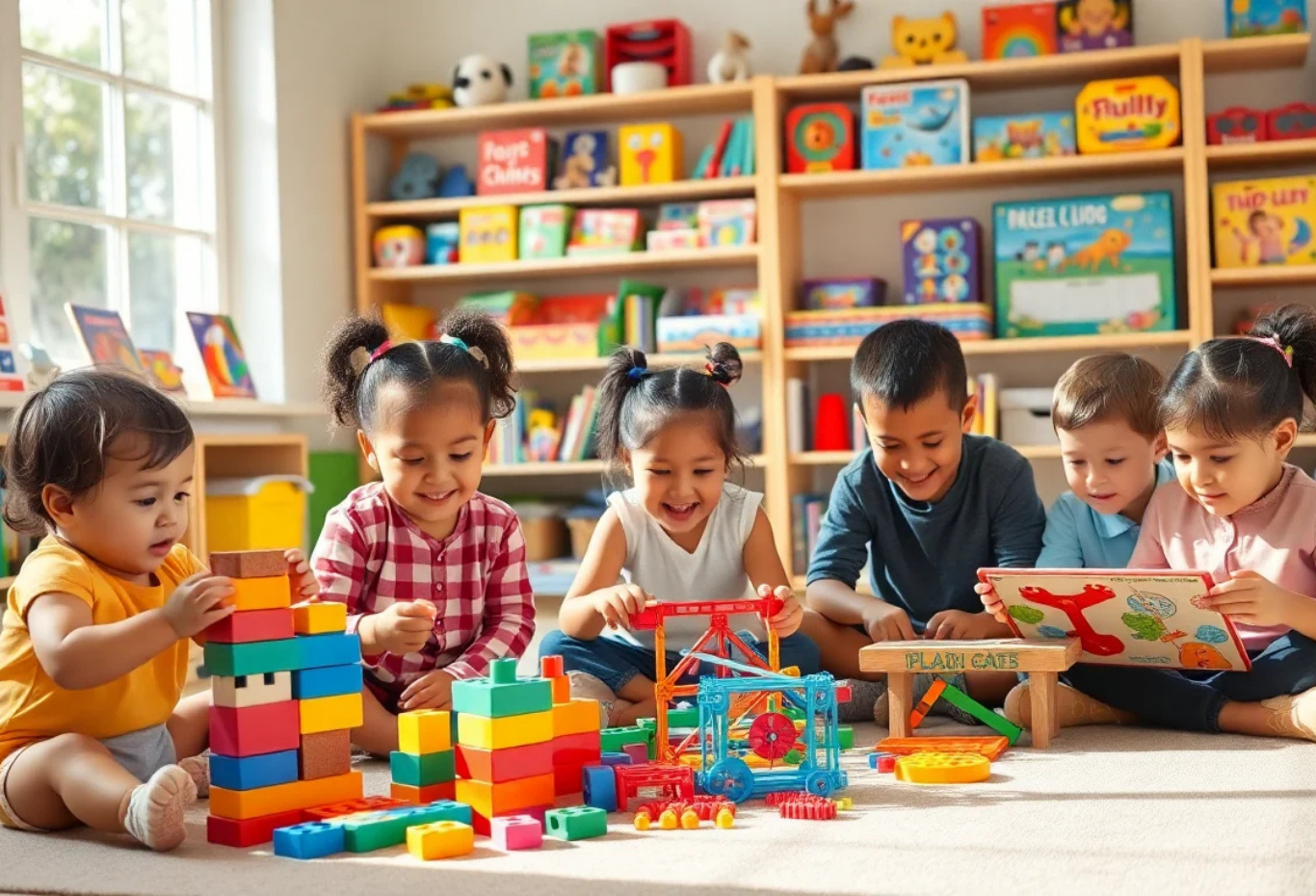
Toys and Games: A Complete Guide to Choosing Fun, Safe, and Engaging Products
Toys and games are an important part of childhood and family life. They provide entertainment, encourage creativity, support learning, and give children opportunities to explore the world around them. From traditional building blocks and dolls to board games, puzzles, outdoor play equipment, and modern electronic toys, there are countless options available for different ages and interests.
Choosing the right toy or game, however, is not simply about selecting the most colorful or popular product. A good toy should be appropriate for the child's age, interests, abilities, and environment. Safety, durability, educational value, and ease of use can also influence whether a product becomes a favorite or ends up unused.
Parents and caregivers can sometimes feel overwhelmed by the enormous selection available in physical stores and online marketplaces. Understanding the different categories of toys and games can make the buying process easier and help families choose products that provide meaningful play experiences.
What Are Toys and Games?
Toys are objects primarily designed for children to play with, explore, imagine, build, or interact with. Games generally involve rules, challenges, goals, or interaction between players, although the categories can overlap.
Examples of toys include:
- Dolls and action figures
- Building blocks
- Toy vehicles
- Stuffed animals
- Pretend-play sets
- Musical toys
- Craft kits
- Outdoor toys
- Educational toys
Games can include:
- Board games
- Card games
- Puzzle games
- Strategy games
- Word games
- Matching games
- Cooperative games
- Family games
- Digital games
The best choices often depend on the child's developmental stage and the type of play they enjoy.
Why Toys and Games Are Important
Play is more than simple entertainment. It gives children opportunities to experiment, make decisions, solve problems, communicate, and express themselves.
Different toys encourage different forms of development. Building toys can encourage creativity and spatial thinking, while pretend-play toys can support storytelling and social interaction.
Games can introduce concepts such as taking turns, following rules, planning, counting, matching, and dealing with winning or losing.
Toys and games can also encourage family interaction. A board game played with parents or siblings can create opportunities for conversation and shared experiences.
Different Types of Toys
The toy market includes products for almost every interest and age group.
Building and Construction Toys
Building toys are designed to let children create structures, vehicles, patterns, or other objects.
Blocks, construction sets, magnetic building pieces, and similar products can encourage creativity and problem-solving.
One advantage of construction toys is that they often support open-ended play. Instead of having only one correct way to use the toy, children can create different designs based on their imagination.
Pretend-Play Toys
Pretend play allows children to imitate situations they see in everyday life.
Toy kitchens, doctor sets, tool kits, play stores, costumes, dolls, and toy houses are common examples.
These toys can encourage storytelling and imaginative play. Children can create scenarios, assign roles, and experiment with different social situations.
Dolls and Action Figures
Dolls and action figures have remained popular across generations.
Children may use them for imaginative storytelling, role-playing, collecting, or social play.
Accessories such as clothing, furniture, vehicles, and playsets can expand the experience.
Toy Vehicles
Cars, trucks, trains, airplanes, boats, and other toy vehicles are popular among many age groups.
Simple push-along vehicles can be suitable for younger children, while detailed model or remote-controlled vehicles can appeal to older children.
Toy vehicles can also become part of larger imaginative play environments involving roads, buildings, garages, or other accessories.
Educational Toys
Educational toys are designed to combine play with learning.
Examples include alphabet toys, counting games, science kits, geography products, memory games, and beginner coding toys.
However, the word "educational" alone does not guarantee that a product is useful. Parents should consider whether the toy actually encourages active participation rather than simply displaying information.
Board Games and Family Games
Board games provide a structured form of play that can involve multiple players.
Depending on the game, players may need to use memory, strategy, communication, counting, planning, or decision-making skills.
Family board games can also encourage social interaction. Players learn to take turns, follow rules, cooperate, and handle different outcomes.
When choosing a board game, consider the recommended age range and the expected playing time. A complex game designed for older players may not be enjoyable for a young child.
Puzzles and Brain Games
Puzzles are another popular category of toys and games.
Jigsaw puzzles encourage children to recognize shapes, patterns, and relationships between pieces. Matching games can support memory and visual recognition, while logic puzzles can introduce problem-solving challenges.
Puzzle difficulty should be appropriate for the player's age and experience. A puzzle that is far too difficult can become frustrating, while one that is too easy may quickly become boring.
Outdoor Toys and Games
Outdoor play provides children with opportunities to move, explore, and interact with their environment.
Popular outdoor toys include:
- Balls
- Scooters
- Bicycles
- Jump ropes
- Water-play toys
- Sand toys
- Sports equipment
- Outdoor playhouses
- Garden games
Outdoor toys should be selected according to the available space and the child's abilities.
Safety equipment may also be appropriate for activities involving bicycles, scooters, skating, or other movement-based toys.
Arts and Crafts Toys
Creative toys can give children opportunities to draw, paint, build, decorate, and experiment.
Art sets, coloring materials, clay, craft kits, bead sets, and beginner sewing or construction activities can encourage creative expression.
Parents should check age recommendations carefully, especially when products contain small pieces, sharp tools, or materials that require adult supervision.
Electronic and Interactive Toys
Technology has become part of the modern toy market. Electronic toys can include interactive learning devices, digital drawing products, programmable toys, remote-controlled products, and other connected devices.
Some electronic toys can introduce children to concepts such as coding, robotics, music, or problem-solving.
However, parents may want to consider how much active participation a toy requires. A product that encourages children to create, solve, build, or interact can provide a different experience from a device that simply delivers passive entertainment.
Privacy can also matter when toys connect to the internet, use microphones, cameras, or companion applications. Parents should review privacy settings and understand what information connected products may collect.
Choosing Toys by Age
Age recommendations can help parents select toys that are appropriate for a child's abilities.
Toys for Babies
For babies, toys should generally be simple, durable, and designed with safety in mind. Soft toys, textured objects, rattles, and age-appropriate activity toys can provide sensory experiences.
Products with small detachable parts should be avoided when they create a choking risk.
Toys for Toddlers
Toddlers often enjoy simple puzzles, stacking toys, building blocks, pretend-play products, and large toy vehicles.
At this stage, toys can encourage movement, basic problem-solving, language development, and imaginative play.
Toys for Preschoolers
Preschool children can explore more complex puzzles, arts and crafts, pretend-play sets, beginner board games, construction toys, and outdoor activities.
Toys that encourage storytelling and cooperative play can be particularly engaging.
Toys for Older Children
Older children may enjoy strategy games, advanced construction sets, science kits, sports equipment, creative technology, complex puzzles, and multiplayer games.
Their personal interests become increasingly important when choosing products.
Toy Safety Considerations
Safety should always be one of the first considerations when purchasing toys.
Parents should check the manufacturer's recommended age range and inspect products for potential hazards.
Important factors include:
- Small parts
- Sharp edges
- Breakable components
- Loose pieces
- Long cords or strings
- Battery compartments
- Magnets
- Materials and finishes
- Product durability
Toys should also be inspected regularly. A product that was safe when new may become damaged after repeated use.
For children who are very young, adult supervision may be necessary for certain toys and activities.
How to Choose a Good Toy
A good toy does not necessarily need to be expensive.
Before buying, consider whether the toy is likely to hold the child's interest. Products that offer multiple ways to play can sometimes provide greater long-term value.
Durability is another important factor. A well-made toy may survive repeated use better than a cheaper product that breaks quickly.
It can also be useful to consider whether the toy encourages active participation. Building, creating, solving, moving, and imagining generally involve more interaction than simply pressing a button to produce a predetermined result.
Toys and Games for Family Time
Games do not have to be limited to children playing alone. Family games can create shared experiences between parents, siblings, grandparents, and children.
Simple card games, board games, puzzles, outdoor sports, and creative activities can all become family activities.
The goal does not always need to be competition. Cooperative games can encourage players to work together toward a shared objective.
Family play can also provide opportunities to teach children how to communicate, follow rules, take turns, and respond appropriately to different outcomes.
Buying Toys Online
Online shopping has made it easier to compare toys and games from different brands and sellers.
Before purchasing, check the product description carefully. Look at dimensions, recommended age, materials, included accessories, and assembly requirements.
Customer reviews can also provide useful information about durability and real-world use.
Parents should pay particular attention to product safety information and seller reliability. If a product seems unusually cheap compared with similar products, investigate the seller and product information before buying.
Sustainable Toy Choices
The large number of toys purchased and discarded every year makes sustainability an important consideration.
Parents can reduce waste by choosing durable products, donating toys that are no longer used, repairing damaged items when practical, and avoiding unnecessary purchases.
Secondhand toys can also be an option for certain categories, provided they are clean, safe, complete, and in appropriate condition.
Wooden toys and other durable products may be attractive to families looking for alternatives to disposable plastic products, although material alone does not determine sustainability.
Organizing Toys at Home
As children collect more toys, organization can become a challenge.
Storage bins, shelves, baskets, cabinets, and toy boxes can help keep play areas manageable.
Keeping frequently used toys accessible can encourage independent play, while rotating toys can make older products feel interesting again.
Toy rotation involves putting some toys away temporarily and bringing them back later. This can help reduce clutter while giving children opportunities to rediscover products they already own.
Common Toy-Buying Mistakes
One common mistake is buying too many toys at once. Children may become overwhelmed when presented with a large number of choices.
Another mistake is choosing products based entirely on popularity. A trending toy may not match a particular child's interests.
Parents may also overlook the space required for larger toys. Before purchasing a play kitchen, indoor slide, large building set, or outdoor equipment, consider where it will be stored and used.
Ignoring age recommendations and safety information can also create unnecessary risks.
Finally, expensive toys are not automatically better. A simple set of blocks or a basic ball can provide hours of creative or active play.
The Future of Toys and Games
The toy industry continues to evolve as technology, educational approaches, and consumer preferences change.
Interactive toys, robotics, augmented experiences, STEM-focused products, creative technology, and connected games are likely to remain important areas of development.
At the same time, traditional toys such as blocks, puzzles, dolls, board games, books, and outdoor equipment continue to have lasting appeal.
The future may therefore combine traditional play with new technology rather than completely replacing one with the other.
Final Thoughts
Toys and games can provide much more than entertainment. They can encourage creativity, imagination, problem-solving, physical activity, communication, and social interaction.
The best choice depends on the child's age, interests, abilities, safety requirements, and the family's available space and budget. Parents do not need to purchase the most expensive or technologically advanced products to create meaningful play experiences.
Simple toys can often be just as engaging when children are given the freedom to explore and create.
By focusing on safety, quality, age suitability, durability, and genuine play value, families can build a collection of toys and games that provides entertainment while supporting learning and development. Whether it is a classic board game, a box of building blocks, an outdoor ball, a creative art kit, or a modern interactive toy, the most valuable products are often those that encourage children to actively participate and enjoy the experience.